


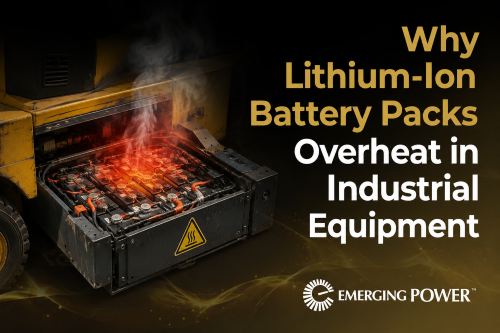
Battery overheating.
In 2025, lithium-ion battery incidents continue to rise globally. A recent business safety study found that 54% of businesses experienced lithium-ion battery-related incidents, including overheating, smoking, or fire events. (aviva.com) For industrial applications, overheating is more than a maintenance issue. It can lead to:- Equipment shutdowns
- Reduced battery lifespan
- Thermal runaway
- Compliance failures
- Safety hazards
- Expensive downtime
Why Lithium-Ion Battery Packs Overheat
Lithium-ion batteries naturally generate heat during charging and discharging. However, industrial environments create extreme operating conditions that accelerate temperature buildup.The Most Common Causes of Battery Overheating
1. High Discharge Loads
Industrial equipment often demands continuous high-current output. Heavy machinery, robotics, UAV systems, and industrial sensors place intense stress on battery cells. When the discharge rate exceeds the battery pack’s thermal handling capability, internal temperatures rise rapidly.2. Poor Thermal Management
Many off-the-shelf battery packs lack advanced cooling systems or airflow optimization. Without proper heat dissipation:- Internal hotspots form
- Cell imbalance increases
- Performance degrades faster
Industrial Environments Make the Problem Worse
Industrial applications expose batteries to conditions far beyond consumer electronics.| Industrial Condition | Impact on Battery |
| High ambient temperatures | Faster thermal buildup |
| Continuous operation | Increased heat generation |
| Dust and contaminants | Reduced cooling efficiency |
| Vibration and shock | Internal cell damage |
| Fast charging cycles | Thermal stress |
| Enclosed equipment spaces | Limited airflow |
- Manufacturing automation
- Medical devices
- Military equipment
- Drones and UAVs
- Asset tracking systems
- IoT devices
What Is Thermal Runaway?
Thermal runaway occurs when heat generation inside a lithium-ion battery exceeds its ability to dissipate heat. Once this chain reaction begins:- Internal temperatures rise uncontrollably
- Electrolytes begin decomposing
- Flammable gases form
- Cells may ignite or explode
Warning Signs Your Battery Pack Is Overheating
Industrial operators should monitor for:- Excessive surface heat
- Swelling battery packs
- Burning odors
- Sudden capacity drops
- Slow charging performance
- Unexpected shutdowns
- Voltage irregularities
How Custom Battery Engineering Prevents Overheating
One of the biggest mistakes OEM manufacturers make is using standard battery packs for complex industrial applications. Industrial systems require custom battery engineering based on:- Load profiles
- Operating temperature
- Duty cycles
- Environmental exposure
- Safety requirements
- Medical applications
- Military systems
- IoT devices
- Smart meters
- UAVs
- Industrial OEM equipment (emergingpower)
Key Solutions That Reduce Battery Overheating
Advanced Battery Management Systems (BMS)
A smart BMS monitors:- Temperature
- Voltage
- Current flow
- Cell balancing
Thermal Management Design
Modern battery packs now integrate:- Air cooling systems
- Heat sinks
- Thermal interface materials
- Phase change materials (PCM)
High-Quality Cell Selection
Cheap or low-quality lithium-ion cells are more prone to:- Internal short circuits
- Heat buildup
- Premature degradation
Why OEMs Are Moving Toward Custom Battery Packs in 2026
Industrial systems are becoming more compact and energy-dense. That means:- Higher power demand
- Less airflow
- More thermal risk
- Custom lithium battery packs
- Intelligent BMS integration
- Ruggedized battery enclosures
- Application-specific thermal design
Battery Overheating Prevention Checklist
Best Practices for Industrial Equipment
Do:
- Use certified battery packs
- Monitor operating temperatures
- Implement thermal management systems
- Use smart charging protocols
- Perform regular battery inspections
- Choose application-specific battery designs
Avoid:
- Overcharging
- Poor ventilation
- Low-quality chargers
- Generic battery replacements
- Excessive fast charging
- Ignoring swelling or heat buildup
FAQs
Why do lithium-ion batteries overheat in industrial equipment?
Industrial systems create high electrical loads, elevated temperatures, and continuous operation cycles that generate excess heat inside battery cells.What causes thermal runaway in lithium-ion batteries?
Thermal runaway typically occurs due to overheating, internal short circuits, overcharging, or poor thermal management.Are custom battery packs safer than standard battery packs?
Yes. Custom battery packs are engineered specifically for the equipment’s power demands, environmental conditions, and safety requirements.How does a Battery Management System help?
A BMS monitors voltage, temperature, and current to prevent unsafe operating conditions and improve battery lifespan.Which industries are most affected by battery overheating?
Industries using high-performance portable equipment such as manufacturing, medical, defense, IoT, robotics, and UAV systems face the highest overheating risks.Final Thoughts
Battery overheating is no longer just a technical issue. It is a major operational and safety concern for industrial OEMs in 2025 and beyond. As industrial systems become more power-dense, manufacturers need battery solutions engineered for:- safety
- thermal stability
- durability
- regulatory compliance
- long-term performance