
Lithium-Ion vs Lead-Acid Batteries: Key Differences, Cost, and Which One Is Better in 2026?

Introduction

In today’s power-hungry world, lithium-ion and lithium polymer (LiPo) batteries are powering everything from medical devices to drones, industrial systems, and consumer electronics. But what exactly are these two technologies? How do they differ, and how can custom battery pack solutions be optimized for performance, safety, and design?

In this guide, we unpack everything you need to know about lithium-ion and lithium-polymer batteries, including key differences, common applications, and when to choose custom solutions from a manufacturer like Emerging Power.

What Are Lithium-Ion and Lithium Polymer Batteries?

1. Lithium-Ion Batteries

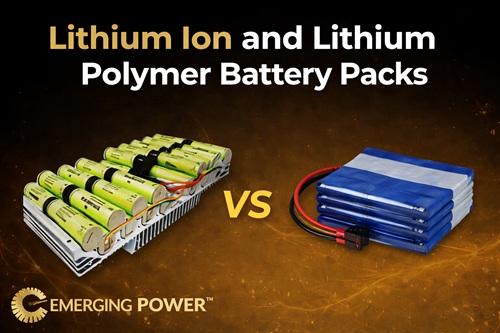
Lithium-ion (Li-ion) batteries are rechargeable cells that store energy by shuttling lithium ions between electrodes. These batteries use a liquid electrolyte and are typically housed in a rigid metal casing, such as cylindrical or prismatic formats.

This construction delivers consistent energy, reliability, and cycle life, making Li-ion packs a go-to choice for robust applications.

Custom Li-ion Battery Specifications:

  • Cell voltage: ~3.6–3.7 V nominal
  • Capacity: 500 mAh to 3500 mAh
  • Typical cycle life: 300–500 cycles
  • Operating temperature range: –20°C to 60°C

Emerging Power’s Li-ion pack design capabilities allow full customization — from form factor to capacity and safety integrations — for devices like industrial sensors, medical instruments, and communication equipment.

2. Lithium Polymer (LiPo) Batteries

Lithium polymer batteries are a category within the lithium-ion family that use a solid or gel-based polymer electrolyte instead of a liquid one. Combined with a flexible pouch form factor, they offer advantages in weight, shape flexibility, and compact design.

Custom LiPo Battery Specifications:

  • Nominal cell voltage: ~3.2–3.7 V
  • Capacity range: 500 mAh to 3000 mAh
  • Energy density: ~250 Wh/L
  • Typical cycle life: 500+ cycles
  • Operating temperature: –20°C to 60°C

LiPo packs excel in adaptable shapes and are ideal for wearable devices, IoT products, and thin electronics where space and weight matter most.

Lithium Ion vs Lithium Polymer — Key Differences

Understanding the technical and practical differences helps engineers and product designers make the right choice.

Feature Lithium-Ion Lithium Polymer (LiPo)
Electrolyte Liquid Gel or polymer solid
Packaging Rigid (metal casing) Flexible pouch
Energy Density High & consistent Optimized space usage
Weight Slightly heavier Lightweight
Cycle Life Long (500+ cycles) Moderate (300–500 cycles)
Design Flexibility Limited High
Best Use Cases Industrial, EVs, mass production Wearables, custom devices

Important Note: While both are lithium-ion by chemistry, the differences come down to design, flexibility, and application fit.

Which Battery is Best for Your Project?

Choose Lithium-Ion If:

  • You need high energy density and long life
  • You require strong safety and structural integrity
  • Applications include industrial equipment, medical devices, or backup systems

Choose Lithium Polymer (LiPo) If:

  • Your product demands custom shapes and compact sizes
  • Weight and thickness optimization is critical
  • You need high discharge bursts in a lightweight form

Custom battery manufacturers like Emerging Power can tailor both chemistries with the right safety systems and certifications.

The Role of Custom Battery Design

  • Form factor & weight control: Fit batteries to device specifications
  • Battery Management Systems (BMS): Ensure safety and performance
  • Thermal & charging optimization: Extend battery life
  • Electronics integration: Connectors, PCBs, and testing
  • Certifications: UL, UN38.3, IEC compliance

Emerging Power provides full lifecycle support — from design to high-volume production — ensuring optimal performance and compliance.

Common Applications of Custom Lithium Battery Packs

  • Medical and wearable devices
  • IoT sensors and wireless systems
  • Drones and UAVs
  • Portable consumer electronics
  • Industrial and military applications
  • Electric mobility and energy storage

Conclusion

Both lithium-ion and lithium polymer batteries offer unique advantages and are essential in modern power solutions. Understanding their differences helps in selecting the right battery for your product.

Leveraging custom battery pack design ensures optimal performance, safety, and lifecycle for today’s demanding technologies.

Call to Action

Ready to design a custom Li-ion or LiPo battery pack for your product?
📞 Contact Emerging Power for a quote or technical consultation today!
Future Prospects of Drone Battery Technologies: Enhancing Flight Performance

Did you know that recent advancements in battery technology have the potential to double drone flight times?

As drones become essential in various industries, the evolution of the drone battery pack plays a crucial role in improving performance, extending flight durations, and supporting a wider range of applications.

From commercial and military uses to recreational drone operations, better battery technology is necessary to keep up with growing demands.

Advancements in Battery Technology

The drone industry is undergoing rapid advancements in battery technologies. Engineers and researchers are continuously working on improving:

  • Energy efficiency – Reducing power loss during operation.
  • Flight duration – Extending the time drones can stay airborne.
  • Sustainability – Developing eco-friendly energy solutions.

Here are some of the most notable developments:

Next-Generation Batteries

New lithium-based batteries with higher energy density are being developed to extend drone flight times.

Many companies have introduced batteries with an impressive energy density of 410 Wh/kg, significantly improving drone endurance.

These advanced batteries allow drones to:

✔ Fly longer distances.
✔ Perform well in extreme climates.
✔ Support applications like search and rescue, delivery services, and aerial inspections.

Hydrogen Fuel Cells

Hydrogen fuel cell technology is gaining attention as an alternative power source for drones.

Unlike conventional lithium batteries, hydrogen fuel cells generate electricity through a chemical reaction between hydrogen and oxygen. The only byproduct is water vapor, making them an eco-friendly option.

Key Benefits:

✅ Extended flight times – Drones can operate for several hours.
✅ Environmentally friendly – No harmful emissions.
✅ Ideal for high-endurance applications like:

  • Agricultural mapping
  • Border surveillance
  • Infrastructure inspections

Solar Power Integration

Solar-powered drones are another breakthrough in energy efficiency.

Manufacturers are integrating lightweight and flexible solar panels into drone designs. This allows batteries to recharge mid-flight, extending operational time without adding significant weight.

Solar-powered drones are particularly useful for:

✔ Environmental monitoring
✔ Wildlife conservation
✔ Disaster response operations

These drones can operate for long hours without needing frequent access to charging stations.

Future Outlook

The future of drone battery pack technology looks promising. Continuous research and investment aim to enhance efficiency, sustainability, and affordability.

Material Innovations

Researchers are exploring new battery materials that are:

Lightweight yet powerful – Helps drones fly longer without extra weight.
Faster charging – Reduces downtime between flights.
Safer – Solid-state batteries minimize the risk of overheating and short-circuiting.

Solid-state batteries could revolutionize drone power sources in the coming years.

Hybrid Power Systems

A hybrid approach is gaining interest. This combines:

  • Batteries – Store and supply steady energy.
  • Fuel cells or supercapacitors – Provide additional bursts of power when needed.

This system optimizes power consumption, allowing drones to:

✔ Operate longer
✔ Maintain consistent performance
✔ Reduce battery wear and tear

By integrating multiple energy sources, manufacturers can create more efficient and versatile drone models.

Regulatory Support and Industry Growth

As drone technology advances, regulatory bodies are expected to introduce policies promoting battery innovations.

Government initiatives and funding for clean energy solutions will further drive innovation in drone battery technology.

With better regulations and industry standards, the adoption of advanced drone battery pack solutions will become more widespread.

Conclusion

The evolution of drone battery pack technologies is essential for the continued growth of the drone industry.

Longer flight times, enhanced safety features, and sustainable energy sources will unlock new possibilities for both commercial and recreational drone applications.

Companies like Emerging Power are leading the way in providing advanced battery solutions that meet the increasing demands of modern drones.

The development of custom lithium battery packs will play a significant role in shaping the future of drone technology. These specialized solutions will cater to different industries, making drones more reliable, efficient, and capable than ever before.