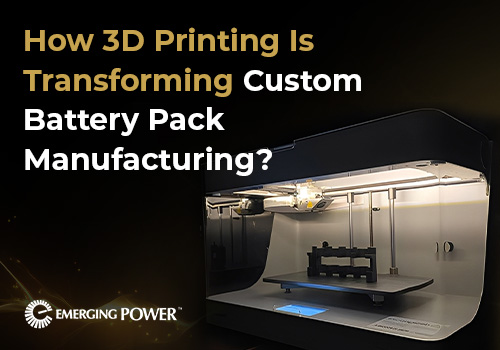
How 3D Printing Is Transforming Custom Battery Pack Manufacturing in the U.S.

Introduction

In today’s competitive energy landscape, battery manufacturers in the USA are under pressure to deliver safer, smaller, and more efficient energy solutions—faster than ever. One innovation leading this shift is 3D printing manufacturing, also known as additive manufacturing. From rapid prototyping to next-gen solid-state battery designs, 3D modeling and 3D printing are unlocking new frontiers for custom battery pack production.

In this blog, we’ll break down how 3D printing is shaping the future of Li-ion battery manufacturing, the top use cases, benefits, challenges, and what the road ahead looks like.


What Is 3D Printing in Battery Manufacturing?

3D printing allows manufacturers to build components layer by layer from a digital model, creating complex geometries that traditional processes can’t easily match. In battery production, this includes:

  • Printed casings and pack enclosures
  • Internal cooling structures for thermal regulation
  • Custom cell layouts and curved or embedded housings
  • Advanced solid-state components are printed directly

By integrating 3D modeling early in the design process, battery manufacturers gain a powerful edge in customization and performance.


Top Emerging Use Cases for 3D Printing in Battery Packs

1. Solid-State / All-Printed Battery Cells

Researchers are 3D-printing entire battery cells—including electrodes and electrolytes—for safer, high-density solid-state batteries.


2. Custom Conformal Designs

With 3D modeling, housings can be printed to match any device contour. Ideal for medical, wearable, and aerospace applications needing non-planar battery integration.


 3. Thermal Management Structures

Internal heat sinks, airflow channels, or porous lattices can be printed inside battery enclosures to control temperature, improving safety and lifespan.


4. Rapid Prototyping

3D printing accelerates R&D cycles. No need for molds or tooling—just print, test, and iterate. This agility gives Li-ion battery manufacturers a significant go-to-market advantage.


5. Integrated All-in-One Packs

Print casings, cooling, and connector features as one part—reducing assembly steps, weight, and complexity.

Why It Matters for U.S. Battery Manufacturers

Advantage Impact
Design Flexibility Custom geometries, shapes, and fit for specific devices
Performance Boost Shorter ion paths, optimized electrodes, better heat regulation
Safety Improvements Stronger enclosures, built-in cooling, fewer failure points
Cost & Waste Reduction Less material waste, no tooling, fewer production stages
Faster Product Development Rapid prototyping = faster innovation cycle and reduced time-to-market

Key Challenges to Consider

  • Material Compatibility: Not all battery materials (e.g., solid electrolytes) work well with current printing tech.
  • Throughput at Scale: 3D printing lags in speed for high-volume EV pack production.
  • Equipment Costs: High initial investment and expertise required.
  • Post-Processing: Printing may still require curing, assembly, and finishing steps.

What’s Next: The Future of Battery Manufacturing with 3D Printing

  • Fully Printed Batteries: Printing cells, enclosures, and connectors in one build
  • Hybrid Production Models: Mixing 3D printing with CNC and injection molding
  • New Printable Materials: Graphene, solid electrolytes, and nano-inks
  • Standardization & Compliance: Evolving UL, UN38.3, and IEC standards to include 3D-printed components

FAQ 

Q1: Can 3D printing fully replace traditional battery production?
Not yet—but it’s rapidly replacing steps like prototyping, casing, and small-batch production.
Q2: Is 3D modeling hard to implement for battery parts?
It requires CAD expertise and material science knowledge, but delivers huge returns in design precision.
Q3: Is it safe to use 3D-printed battery components?
Yes, when using flame-retardant materials and following industry certifications like UL and UN38.3.


Ready to Integrate 3D Printing Into Your Battery Projects?

Emerging Power offers end-to-end custom battery pack development with in-house 3D printing capabilities. Whether you’re building a medical device, wearable, industrial sensor, or UAV — we provide prototyping, design, and smart integration solutions that reduce time and cost without compromising safety.

📞 Contact Us
Website: https://emergingpower.com
Phone: (201) 441-3590
Email: sales@emergingpower.com
How to Choose the Best Lithium-Ion Battery Supplier in 2026

Introduction: Why Supplier Choice Matters in 2026

As the global demand for energy storage continues to surge, choosing the right lithium‑ion battery supplier in 2026 is no longer just about pricing; it’s about reliability, compliance, and long‑term scalability.

Whether you’re in EV manufacturing, solar storage, telecom, or industrial IoT, your success depends on working with lithium‑ion battery suppliers who can deliver consistent quality, technical support, and certified products.

In this guide, we’ll show you exactly how to evaluate and choose the best Li‑ion battery suppliers in 2026 and why Emerging Power is one of the leading names to trust.


What Makes a Great Lithium‑Ion Battery Supplier in 2026?

Choosing the right supplier requires more than reviewing specs. Here’s what truly matters:


1. ✅ Certifications & Compliance
Always choose a lithium‑ion battery supplier with global compliance:
• ISO 9001 – Quality management
• UN 38.3 – Safety for battery transportation
• RoHS / CE / UL – For international markets
• Custom certifications for EV, telecom, or energy storage applications

📎 View our certifications →


2. 🏭 Manufacturing Capabilities
Look for suppliers with scalable production facilities and a proven track record. This includes:
• In‑house cell design & BMS integration
• Flexible production volumes (prototypes to mass scale)
• Stringent quality control on every batch

🔗 Explore our Battery Manufacturing Process


3. 💡 Technical Support & Customization
Top li ion battery suppliers don’t just ship boxes — they support your engineering teams with:
• Custom battery pack solutions
• BMS integration guidance
• Thermal and mechanical design support
• Lifecycle optimization


4. 🌱 Sustainability & Long‑Term Value
Choose a supplier that’s thinking beyond the next shipment:
• Recyclable cell materials
• Compliance with environmental standards
• Long cycle life + product warranty
• Transparent sourcing of lithium and rare earths


5. 💰 Transparent Pricing & Lead Time
Pricing is important, but beware of hidden costs. Ask for:
• Cost per Wh or kWh
• Customization charges
• Shipping & duties
• Delivery lead times (especially for global supply chain disruptions)


Red Flags to Avoid When Evaluating Suppliers
Even in 2026, many buyers fall into avoidable traps. Watch out for:
• No certifications or unverifiable documents
• No technical support or limited communication
• Overpromising on specs or delivery
• Lack of traceability in raw materials
• Suspiciously low prices (often = low quality or safety risks)


Why Emerging Power Is One of the Best Lithium‑Ion Battery Suppliers in 2026
At Emerging Power, we’ve built a reputation as a trusted lithium‑ion battery supplier for industries across the globe.

✔ ISO‑certified facility in the USA
✔ Proven supply chain reliability
✔ Scalable production & full customization
✔ Fast lead times & dedicated support

Looking for reliable Li‑ion battery suppliers? Let’s talk → Contact Us


Trusted Lithium‑Ion Battery Supplier
Looking for a lithium‑ion battery supplier that delivers quality, compliance, and speed?

Emerging Power is here to power your innovation in 2026.

Call us: (201) 441‑3590
Email: sales@emergingpower.com

Request a Quote


Frequently Asked Questions (FAQs)

Q1. What certifications should I look for in a lithium‑ion battery supplier?
A: At minimum: ISO 9001, UN 38.3, and region‑specific certifications like UL, CE, and RoHS.

Q2. What’s the difference between a battery supplier and a manufacturer?
A: A supplier provides complete battery solutions and may partner with manufacturers. Some, like Emerging Power, are vertically integrated, handling both manufacturing and supply chain.

Q3. How do I know if a lithium‑ion battery supplier is reliable?
A: Look for verified client references, international certifications, transparent processes, and technical documentation.

Q4. Can Emerging Power customize battery packs for my application?
A: Yes! We offer custom solutions for medical, telecom, EV, energy storage, and industrial applications.

Q5. What’s the typical lead time for bulk orders?
A: Lead time depends on specs and quantity. Standard orders ship within 2‑6 weeks. Contact us for exact timelines.


Final Thoughts

In 2026, selecting the right lithium‑ion battery supplier can set your business up for success or failure. The best suppliers offer more than just batteries; they offer partnership, expertise, and peace of mind.

Choose wisely. Choose Emerging Power.

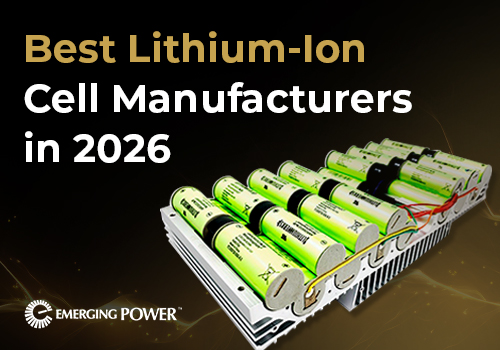
How to Choose the Best Lithium-Ion Cell Manufacturers in 2026

Searching for a Reliable Lithium-Ion Cell Supplier?

Whether you’re sourcing drones, IoT devices, medical equipment, or military applications, finding the right battery partner is critical. With so many lithium-ion cell manufacturers and suppliers in the market, choosing wisely can save your business time, cost, and technical headaches.

In this blog, we’ll break down how to evaluate suppliers, what technologies to look for, and why Emerging Power is a leading name among global custom battery suppliers.

Why Choosing the Right Lithium-Ion Battery Supplier Matters

The quality of your battery supplier directly impacts the safety, efficiency, and lifecycle of your end product. As demand for lithium-ion battery packs continues to surge across industries, choosing a knowledgeable and dependable partner is more important than ever.

Suppliers vs. Manufacturers: What’s the Difference?

Lithium-ion battery manufacturers → Produce battery cells and complete battery packs.
Lithium-ion battery suppliers → Distribute, customize, and often support product integration.

Emerging Power serves both roles, manufacturing custom battery packs and acting as a trusted Li-ion supplier for diverse industry needs.

What to Look for in a Lithium-Ion Battery Supplier

1. Experience & Technical Capability

Choose a partner with deep knowledge in battery design, chemistry, and system integration.
Emerging Power brings over 120 years of collective experience in custom battery pack design, manufacturing, and testing.

2. Custom Battery Design Services

Off-the-shelf batteries often fail to meet unique requirements. Look for suppliers that offer:

3. Safety, Certifications & Compliance

Ensure compliance with UN38.3, IEC, UL, and RoHS standards. A quality supplier should also provide regulatory support.

4. Chemistry Expertise

Different applications require different chemistries. Emerging Power supports:

  • Lithium-ion (Li-ion)

  • Lithium-polymer (Li-Po)

  • Lithium iron phosphate (LiFePO4)

  • Lithium primary

Tip: Each chemistry serves different needs — energy density, safety, size, or lifespan.

Why Emerging Power Is a Trusted Lithium-Ion Manufacturer

Emerging Power is one of the world’s top-rated lithium-ion battery suppliers and cell manufacturers, supporting OEMs across medical, defense, IoT, asset tracking, and more.

We Offer:

  • Custom and standard battery packs

  • High-performance 18650 and Li-Po cells

  • In-house design, engineering, and testing

  • Full regulatory support and certifications

  • Global supply chain and logistics

Industries We Serve

  • Medical Devices

  • Smart Meters & Sensors

  • Military Equipment

  • UAVs and Drones

  • Asset Tracking & IoT

Ready to Work with a Reliable Supplier?

If you’re looking for a high-quality, experienced Li-ion battery supplier or manufacturer, Emerging Power has the knowledge, products, and support you need.

Phone: (201) 441-3590
Email: sales@emergingpower.com
Final Thoughts

Choosing the right lithium-ion partner in 2026 is about more than price — it’s about safety, performance, compliance, and innovation.

Whether you’re seeking Li-ion battery manufacturers, lithium cell manufacturers, or lithium-ion battery suppliers, Emerging Power is your end-to-end solution.

Power your next innovation with experience you can trust.
Request a Quote Now

Li-Polymer Batteries: Extending Device Lifespan with Improved Charging Practices

Did you know that improper charging habits can reduce battery lifespan by up to 30%? Li polymer battery manufacturers are constantly working to improve battery efficiency, but user practices play a crucial role in maintaining battery health. Understanding the right way to charge these batteries can extend their lifespan and improve performance.

The Importance of Proper Charging for Li-Polymer Batteries

Li-polymer batteries are widely used in smartphones, laptops, drones, and other portable devices. Unlike older battery types, they offer higher energy density, lightweight designs, and better safety features. However, improper charging can degrade their performance over time.

Common Charging Mistakes That Reduce Battery Life

Many users unknowingly damage their batteries by following poor charging habits. Here are some mistakes to avoid:

  • Overcharging: Keeping the battery plugged in after reaching 100% can generate excess heat, which degrades battery cells.
  • Deep Discharges: Allowing the battery to drain completely before recharging can shorten its lifespan.
  • Using Cheap Chargers: Low-quality chargers may deliver inconsistent power, damaging battery cells.
  • Charging in Extreme Temperatures: High heat or extreme cold affects battery chemistry, reducing efficiency.

By avoiding these mistakes, users can significantly extend the lifespan of their Li-polymer batteries and maintain device performance.

Best Charging Practices for Longer Battery Life

To get the most out of your battery, follow these simple charging strategies:

  1. Keep the Battery Between 20% and 80%

Avoid letting the battery drop below 20% or charge beyond 80%. Staying within this range reduces stress on battery cells and extends lifespan.

  1. Use a Quality Charger

Always use a charger from a trusted lithium battery distributor. A high-quality charger provides stable voltage and protects against overheating.

  1. Avoid Fast Charging When Not Needed

Fast charging is convenient, but frequent use generates heat and degrades battery cells. Use it only when necessary.

  1. Unplug After Reaching Full Charge

Leaving the device plugged in overnight can cause unnecessary wear. If possible, unplug it once it reaches full charge.

  1. Store Batteries Properly

If storing a device for a long period, keep the battery level at around 50% and store it in a cool, dry place.

How Li-Polymer Battery Manufacturers Improve Battery Lifespan

Top Li-polymer battery manufacturers are developing advanced technologies to improve battery life and charging efficiency. Some of these innovations include:

  • Smart Battery Management Systems (BMS): These systems regulate charging and discharging to prevent overcharging and overheating.
  • Improved Electrolytes: Researchers are working on new materials that enhance battery stability and longevity.
  • High-Efficiency Charging Algorithms: These optimize charging speed without causing excessive heat buildup.

The Role of a Trusted Lithium Battery Distributor

Reliable lithium battery distributors provide high-quality batteries that last longer and perform better. When purchasing batteries, it’s important to choose suppliers who follow strict quality control standards.

Emerging Power: A Leader in Battery Solutions

Emerging Power is a trusted name in the battery industry, offering high-performance Li-polymer batteries and advanced charging solutions. The company provides custom battery solutions for various industries, ensuring efficiency and reliability.

Conclusion

Extending battery lifespan requires both technological advancements and proper user habits. By following the right charging practices and choosing high-quality batteries from a trusted lithium battery distributor, users can enjoy longer-lasting, more efficient power solutions. With industry leaders like Emerging Power driving innovation, the future of battery technology looks promising.

Maximizing Battery Efficiency: Key Advances in Lithium-Ion Technology

Lithium ion battery rechargeable technology has improved battery life by nearly 50% over the past decade. As consumer demand for longer-lasting and faster-charging batteries grows, researchers and manufacturers continue to push the limits of battery performance. These advancements are shaping industries from consumer electronics to electric vehicles, ensuring more efficient and sustainable power solutions.

Why Battery Performance Matters

Batteries power nearly every aspect of modern life. Smartphones, laptops, drones, electric cars, and medical devices all rely on battery technology to function. However, many consumers and businesses face challenges such as short battery life, long charging times, and performance degradation over time.

To address these issues, experts focus on three key factors:

  • Energy density: Storing more power without increasing size.
  • Charging speed: Reducing downtime by enabling faster charging.
  • Lifespan: Extending the number of charge cycles before performance declines.

Key Innovations in Lithium-Ion Battery Technology

Significant progress has been made in making lithium-ion battery rechargeable technology more efficient. Below are some of the latest innovations improving battery performance.

  1. Solid-State Batteries

Solid-state batteries replace the liquid electrolyte in traditional lithium-ion batteries with a solid electrolyte. This change improves energy density, enhances safety, and extends battery life. These batteries are expected to revolutionize electric vehicles and portable electronics.

  1. Silicon Anodes

Replacing graphite with silicon in battery anodes increases energy storage capacity. Silicon anodes can hold ten times more lithium than graphite, significantly improving battery life. Companies are already developing commercial applications for this technology.

  1. Fast-Charging Technology

Modern fast-charging solutions reduce charging time without compromising battery health. Innovations like graphene-enhanced batteries and improved charging algorithms allow devices to charge in minutes rather than hours.

  1. Battery Management Systems (BMS)

Advanced BMS technology optimizes power usage, prevents overcharging, and prolongs battery lifespan. Smart BMS solutions are being integrated into electric vehicles and high-end consumer electronics to ensure maximum efficiency.

Challenges in Battery Performance Improvements

While progress is being made, several challenges remain in developing better lithium-ion battery rechargeable solutions.

  • Heat Generation: Faster charging can lead to overheating, reducing battery life.
  • Material Costs: Advanced materials like silicon and solid electrolytes can be expensive.
  • Recycling Issues: Proper disposal and recycling of lithium-ion batteries remain a challenge.

Researchers and battery manufacturers continue working to overcome these obstacles to make batteries safer, more affordable, and environmentally friendly.

The Role of Efficient Charging Accessories

In addition to battery advancements, charging accessories play a crucial role in maintaining battery performance. Using the right adapter for battery charger ensures efficient and safe charging, preventing overheating and power loss.

Reliable charging solutions, such as those provided by Emerging Power, help consumers and businesses maximize the lifespan of their batteries. Investing in high-quality chargers and adapters reduces wear and tear, ensuring consistent performance.

Conclusion

Emerging Power is at the forefront of advancing battery technology, providing innovative solutions for various industries. As the demand for lithium ion battery rechargeable technology grows, the company continues to develop high-performance energy storage options that improve efficiency and reliability.

Emerging Power remains committed to delivering cutting-edge battery solutions that meet the ever-growing power needs of modern applications.

The Evolution of Custom LiPo Batteries in Medical Implants and Wearable Health Tech

Did you know that modern pacemakers can run for over a decade on a tiny battery? Battery technology has played a crucial role in advancing medical implants and wearable health devices. As these technologies become more sophisticated, the demand for a reliable custom lithium ion polymer battery has increased. These batteries power life-saving devices while ensuring safety, longevity, and efficiency.

The Role of LiPo Batteries in Medical Technology

Medical devices require compact, lightweight, and high-performance batteries. Traditional batteries often fall short, making custom lithium ion polymer battery solutions the ideal choice. These batteries offer flexibility in size and shape, making them perfect for medical applications.

Medical Implants

Implantable devices like pacemakers, insulin pumps, and neurostimulators rely on efficient batteries. Custom lithium ion polymer battery packs ensure:

  • Long lifespan for fewer replacements
  • Stable power output for reliable performance
  • Biocompatible materials for safety

Pacemakers, for instance, require steady power to regulate heartbeats. With improved battery efficiency, patients experience fewer complications and reduced need for surgical replacements.

Wearable Health Tech

Wearable medical devices track real-time health data, aiding early diagnosis and treatment. Some common examples include:

  • Smartwatches with heart rate and ECG monitoring
  • Continuous glucose monitors for diabetics
  • Fitness trackers detecting abnormal health patterns

These devices need lightweight yet powerful batteries to function all day. Custom lithium ion polymer battery solutions provide longer battery life without increasing weight, making wearables more comfortable for users.

Key Advantages of Custom LiPo Batteries in Medical Devices

Custom batteries offer several benefits over standard options.

  1. Compact and Lightweight

Medical devices must be small and unobtrusive. LiPo batteries have a thin and flexible design, allowing manufacturers to create sleek and comfortable devices.

  1. High Energy Density

These batteries store more energy in a smaller space, providing longer usage times. This is crucial for implants and wearables that require long-term power.

  1. Fast Charging and Low Self-Discharge

Quick charging allows users to rely on their devices without long downtime. Low self-discharge means batteries retain power even when not in use.

  1. Safety and Reliability

Medical batteries must be safe for prolonged contact with the human body. Custom LiPo batteries include safety features like:

  • Overcharge protection
  • Temperature control
  • Leak-proof design

These features reduce risks like overheating and battery failure, ensuring patient safety.

Future Innovations in Medical Battery Technology

The medical field continues to push the limits of battery performance. Future advancements may include:

  1. Wireless Charging for Implants

Some researchers are exploring wireless energy transfer, eliminating the need for battery replacements. This could reduce the need for surgical procedures in patients with pacemakers or neurostimulators.

  1. Self-Charging Batteries

New materials are being developed to create self-charging batteries that harness body heat or movement. This could revolutionize wearable health tech by extending battery life indefinitely.

  1. Smart Batteries with AI Monitoring

Artificial intelligence could help predict battery performance and alert users before a failure occurs. This would be especially useful for critical medical devices.

Emerging Power: Leading the Way in Medical Battery Innovation

As the demand for custom lithium ion polymer battery solutions grows, companies like Emerging Power are developing high-performance battery packs for medical devices. They specialize in:

  • Custom-designed batteries to fit specific medical needs
  • Advanced safety features ensuring reliability
  • Long-lasting power solutions for implants and wearables

Our expertise in medical battery technology makes them a trusted power battery company for healthcare applications.

Conclusion

Battery technology has transformed the medical industry, allowing for life-saving implants and innovative wearable health tech. The need for efficient, lightweight, and long-lasting power sources continues to grow. Custom lithium ion polymer battery solutions are meeting these demands by providing safer and more reliable energy for medical devices.

With companies like Emerging Power leading advancements, the future of medical batteries looks promising. These innovations will enhance patient care, improve device functionality, and expand possibilities in the medical field.

Key Features of Military Battery Packs: What Makes Them Different?

Military battery packs are crucial for ensuring that soldiers, equipment, and machines stay powered in the toughest conditions. These batteries are designed to perform reliably in extreme environments where standard battery packs simply can’t keep up. Military battery packs are built to endure the harshest temperatures, resist damage from physical impacts, and last longer than regular batteries. But what exactly makes them so different? Let’s break down some key features that set them apart.

Durability in Harsh Environments

One of the most important aspects of a military battery pack is its durability. Unlike standard consumer batteries, military batteries are built to survive in extreme conditions, including extreme heat, cold, and exposure to water. These batteries must maintain their performance even in freezing or scorching temperatures that would cause regular batteries to fail.

A ruggedized battery pack often has a tough outer casing that protects the internal components from environmental stress. The casing is typically made from reinforced materials, such as hardened plastics or aluminum, to prevent damage from physical impacts, water, and dust. This means military battery packs can be used in combat zones, during extreme weather, or in remote areas without worrying about environmental damage.

High Energy Density for Longer Operation

Another important feature of military battery packs is their high energy density. This means they can store a large amount of energy in a small, lightweight package. Military equipment often needs to be lightweight and portable, so having a battery that delivers more power without adding extra weight is critical.

The high energy density of military battery packs ensures that they can power devices like radios, drones, or night-vision goggles for long periods. This is essential for maintaining operations in the field without the need to carry extra batteries or recharge frequently.

Reliability and Longevity

Reliability is a key factor in military battery packs. Soldiers and military units rely on their equipment to work perfectly at all times, especially when in the field or during missions. A battery failure can compromise the safety of the operation. For this reason, military battery packs are designed to be more reliable than consumer-grade batteries.

These batteries are built to withstand thousands of charge and discharge cycles without significant performance loss. This ensures that they last much longer than regular batteries, making them a cost-effective option for the military. The long lifespan of these batteries is especially important in situations where replacements may not be readily available.

Advanced Charging Capabilities

Charging military battery packs is another key feature that sets them apart. Military battery packs are designed with fast-charging capabilities to reduce downtime and ensure that equipment is ready to go when needed. This is especially useful in battle situations where every second counts.

Many military batteries also come with special charging systems that ensure the battery is charged safely and efficiently. These charging systems may include overcharge protection and temperature monitoring, which help prevent the battery from overheating or being damaged during the charging process.

Temperature and Shock Resistance

Military battery packs are built to operate in a wide range of temperatures. Whether it’s extremely hot or cold, military batteries are designed to continue functioning without a significant loss of performance. This makes them ideal for use in various parts of the world, including deserts or arctic regions, where temperatures can fluctuate greatly.

Additionally, military battery packs are resistant to shock and vibration. This is essential for military vehicles, drones, and other equipment that are often exposed to harsh conditions, such as rough terrain or air travel. The ability to withstand shocks ensures that these batteries continue to work even after being dropped or jostled.

Security Features

Military battery packs also come with built-in security features to ensure that they are tamper-proof and safe to use. In combat situations, it’s critical that the battery remains secure from unauthorized access. These batteries are often designed with advanced encryption systems to prevent unauthorized access to the power source.

Moreover, some military battery packs include self-destruct mechanisms or automatic shutdown features that activate if the battery is tampered with. These security measures ensure that the battery does not fall into enemy hands and compromise the mission.

Emerging Power: Your Source for Military-Grade Batteries

Emerging Power understands the importance of having reliable and rugged power sources for military and industrial applications. We specialize in providing ruggedized battery packs and military battery packs that meet the highest standards of durability, energy efficiency, and reliability. Whether you need a power solution for drones, tactical communication systems, or portable energy devices, our batteries are designed to withstand the most challenging conditions.

Our military battery packs offer the best performance in extreme environments, ensuring that your equipment stays operational when it matters most. With our advanced technology and expert knowledge, we provide the ideal power solutions for your needs.

Design for Manufacturing: How Early Project Planning Reduces Battery Pack Production Delays

In custom battery pack manufacturing, delayed production timelines cost more than just time—they mean lost revenue, missed market opportunities, and competitive disadvantage. While most companies focus exclusively on perfecting product specifications, they overlook the critical factor that determines on-time delivery: Design for Manufacturing (DFM).

At Emerging Power, our 40+ years of battery design and assembly experience have proven one fundamental truth: the decisions you make in the earliest planning stages have the most profound impact on production timelines, costs, and quality. This article reveals how integrating DFM principles from day one transforms battery pack development from a source of delays into a strategic advantage.

What is Design for Manufacturing in Battery Pack Production?

Design for Manufacturing is a proactive engineering approach that considers manufacturing constraints, assembly processes, and production realities during the initial design phase, not as an afterthought. In battery pack development, DFM encompasses everything from cell selection and BMS integration to enclosure design and testing protocols.

The principle is straightforward: designs that are easier to manufacture are faster to produce, more reliable, and more cost-effective.

The Hidden Costs of Poor Planning

When battery pack projects skip thorough early-stage planning, the consequences cascade throughout production:

  • Late-stage design changes require expensive redesigns when manufacturability issues surface during prototyping
  • Supply chain disruptions from components with long lead times or limited availability
  • Quality issues stemming from designs that don’t account for real-world manufacturing tolerances
  • Certification delays when safety and regulatory requirements aren’t integrated from the start

A recent medical device project demonstrates this perfectly. The initial design featured custom-shaped cells that would have added 8-12 weeks to the lead time. Through early planning discussions, our team proposed a configuration using standard cell formats with a custom enclosure instead—maintaining the same form factor while reducing lead time by 10 weeks.

Three Ways Early DFM Planning Accelerates Battery Pack Production

1. Optimized Component Selection Prevents Supply Chain Delays

The battery supply chain has become increasingly volatile. Selecting components without considering availability creates production bottlenecks that can halt your entire timeline.

Our Approach: During initial project planning, our engineering team evaluates cell chemistries, BMS components, and connectors based not just on performance but also on:

  • Supplier reliability and lead times
  • Component availability at required volumes
  • Alternative options for critical parts
  • Supply chain stability across the project lifecycle

Real Impact: Projects using 80% or more standard, readily available components experience 50% fewer supply chain delays. We leverage our established relationships with leading manufacturers, including Panasonic, Samsung, LG, and Moli Energy, to ensure component access.

2. Design for Assembly (DFA) Reduces Production Cycle Time

Complex assembly sequences slow production and increase defect rates. Early DFA integration simplifies manufacturing workflows from the start.

Our Approach: We optimize designs to:

  • Minimize part count and assembly steps
  • Position components for easy access during assembly
  • Use modular designs allowing parallel assembly of subcomponents
  • Eliminate unnecessary fasteners through snap-fit or adhesive bonding
  • Create integrated wire harnesses instead of multiple small connections

Real Impact: By designing with assembly in mind, we’ve helped customers reduce assembly time by 30-40% compared to their initial designs. This directly translates to faster production ramp-up, lower labor costs, and improved delivery timelines.

3. Integrated Compliance Planning Eliminates Certification Delays

Battery packs require rigorous safety testing and regulatory certification (UL, IEC, UN38.3). Designs that don’t incorporate these requirements from day one often fail initial testing, requiring costly redesigns.

Our Approach: Our project management process integrates safety and regulatory requirements during the design phase:

  • Proper spacing and isolation per safety standards
  • Temperature monitoring and protection features
  • Enclosure design meeting flammability requirements
  • Documentation and test protocols aligned with certification needs

Real Impact: A medical device manufacturer achieved first-time UL certification by integrating requirements early, eliminating an estimated 8-week redesign and recertification cycle. For military and defense applications, our AS9100:2016 certification ensures compliance with stringent aerospace and defense standards.

The Emerging Power DFM Advantage

What sets our approach apart is our consultative engineering partnership. We don’t just execute your design—we collaborate to optimize it for manufacturing success.

Our comprehensive process includes:

Early Design Review: Collaborative assessment of requirements, performance specifications, and production constraints
Manufacturability Analysis: Evaluation of assembly sequences, tooling needs, and quality control checkpoints
Supply Chain Validation: Component availability verification and long-lead-time item procurement
Integrated Testing: Test protocols and certification requirements built into the initial design

This systematic approach has delivered thousands of custom battery solutions across diverse industries, including military/defense, medical devices, industrial OEM, communications, and instrumentation.

We offer the latest in battery technologies, including lithium-ion, lithium polymer, lithium iron phosphate (LiFePO4), lithium primary, and nickel metal hydride—all optimized for manufacturability without compromising performance.

Key Takeaways: DFM Best Practices for Battery Pack Development

Based on our 120+ years of collective manufacturing experience, these principles have the greatest impact:

  1. Engage manufacturing expertise early during the concept phase when design flexibility is highest
  2. Prioritize standard components from reliable suppliers with stable supply chains
  3. Design for testability to accelerate quality control and reduce defect rates
  4. Build manufacturing requirements into specifications from day one
  5. Plan for iteration with schedule buffers for optimization

Conclusion: Turn Early Planning into Competitive Advantage

In battery pack manufacturing, speed to market matters. Every week of delay represents lost revenue and a competitive disadvantage. Design for Manufacturing isn’t just about easier production it’s about transforming your development process into a strategic advantage.

By integrating DFM principles from the earliest planning stages, you can reduce time-to-market by 30-50%, lower production costs, improve product quality, and achieve first-time certification success.

At Emerging Power, our ISO 9001:2015 and AS9100:2016 certifications demonstrate our commitment to quality and reliability. Our consultative approach ensures every project benefits from decades of DFM expertise across commercial and military applications.

Ready to Accelerate Your Battery Pack Project?

Don’t let production delays derail your timeline. Contact Emerging Power today to discover how our DFM-focused approach delivers on-time, high-reliability battery solutions.

Contact Our Engineering Team | Call (201) 441-3590

Learn more about our project management capabilities and how we can help you through your most complex design and manufacturing challenges. The earlier we’re involved in your project, the better your results.

Advancements in Lithium-Ion Battery Technology: Solid-State and Beyond

Did you know that the first commercial lithium-ion battery was introduced in 1991? Since then, it has become the backbone of modern technology, powering everything from smartphones to electric vehicles. Today, advancements in lithium-ion battery technology are shaping the future of energy storage, with a focus on safety, efficiency, and sustainability.

This blog explores the progress made in lithium-ion technology, with an emphasis on solid-state batteries and other emerging innovations.

The Evolution of Lithium-Ion Batteries

A rechargeable lithium-ion battery works by moving lithium ions between the anode and cathode through an electrolyte. Over the years, improvements in materials and design have made these batteries more reliable and efficient.

Early versions had limited energy density and shorter lifespans. Modern lithium-ion batteries now offer higher energy capacity, faster charging, and longer cycles. These advancements have made them essential for powering portable devices, electric vehicles, and renewable energy systems.

However, challenges remain. Safety concerns like overheating and the need for more sustainable materials drive researchers to develop better alternatives.

What Are Solid-State Batteries?

Solid-state batteries are an innovative upgrade to the traditional rechargeable lithium-ion battery. Instead of using liquid electrolytes, they use solid materials to transport ions between the electrodes. This simple change leads to several key benefits:

  1. Increased Safety
    Solid-state batteries are less likely to overheat or catch fire because solid electrolytes are more stable than liquid ones.
  2. Higher Energy Density
    They can store more energy in the same size, making devices lighter and more powerful.
  3. Longer Lifespan
    These batteries can withstand more charge cycles without losing capacity.
  4. Faster Charging
    Solid-state technology supports quicker energy transfer, reducing charging time significantly.

Despite their advantages, solid-state batteries are still in development. Their high production costs and complex manufacturing processes pose challenges for large-scale adoption. However, progress is being made, and industries are optimistic about their future.

Beyond Solid-State: Other Emerging Technologies

While solid-state batteries are leading the way, other innovations in lithium-ion technology are also gaining attention.

  1. Lithium-Sulfur Batteries

Lithium-sulfur batteries offer higher energy density and are cheaper to produce. They use sulfur, an abundant and non-toxic material, as the cathode. However, improving their lifespan remains a technical challenge.

  1. Lithium-Air Batteries

Lithium-air batteries use oxygen from the air as the cathode material. This reduces weight and increases energy capacity. These batteries could revolutionize sectors like aviation and long-range electric vehicles.

  1. Recyclable Lithium-Ion Batteries

Efforts are being made to create lithium-ion batteries that are easier to recycle. These designs reduce waste and recover valuable materials like cobalt and lithium.

  1. Flexible and Thin-Film Batteries

Designed for wearable technology and medical devices, these batteries are lightweight and adaptable to different shapes. They expand the possibilities of energy storage for compact gadgets.

The Role of AI in Battery Development

Artificial intelligence (AI) is playing a significant role in improving rechargeable lithium-ion battery technology. AI tools analyze data to optimize battery design, predict performance, and even manage charging systems. This reduces development time and enhances overall efficiency.

What These Advancements Mean for Consumers and Industries

Advancements in lithium-ion battery technology are transforming energy storage for multiple industries. Electric vehicles are becoming more affordable and efficient. Renewable energy systems are achieving better integration with the grid. Portable devices are now more powerful and longer-lasting.

For consumers, this translates to lower costs, better performance, and safer energy storage options. For industries, these advancements open up opportunities for innovation and growth.

Emerging Power: Leading the Way in Battery Solutions

As battery technology evolves, reliable partners like Emerging Power are essential. We specialize in providing high-quality energy storage solutions, from advanced rechargeable lithium-ion battery systems to integrated setups for sustainable energy applications.

If you need robust solutions such as an inverter with battery charger, trust Emerging Power to deliver cutting-edge products. We combine expertise with innovation to meet your energy needs. Choose us for solutions that keep you powered for the future.